
Houston Outdoor Living Design Tips for 2026
In Houston, outdoor living isn’t a seasonal luxury—it’s an extension of the home. With long warm months and a culture built around gathering and entertaining, outdoor spaces play a central role in everyday life.
As we move into 2026, the focus of outdoor living design in Houston is shifting beyond basic patios and grills. Homeowners are prioritizing spaces that balance comfort, durability, and architectural cohesion—designed to function as naturally as the interiors they connect to.
For those planning a custom home or renovation, outdoor living is no longer an add-on. It’s an essential part of how the home is designed from the start.
Designing Outdoor Spaces as an Extension of the Home
The most successful outdoor spaces feel connected to the architecture rather than added onto it. Layout, materials, and transitions between interior and exterior spaces should be considered together from the beginning.
Covered patios, sliding or folding glass walls, and consistent flooring materials help create a seamless flow between indoor and outdoor living areas. When these elements are aligned, outdoor spaces feel like a natural continuation of the home.
This level of integration also allows outdoor spaces to function more like primary living areas, rather than seasonal additions.
Shade Strategies That Work in Houston’s Climate
In Houston, shade is essential. Effective outdoor design begins with understanding how sun exposure shifts throughout the day and across seasons.
Architectural solutions such as deep roof overhangs, covered structures, pergolas, and strategically placed walls or screens help reduce heat gain while improving comfort. These elements not only make outdoor spaces more usable, but also help protect finishes and materials from excessive sun exposure over time.
Landscape design also plays an important role. Trees and plantings can provide natural shade while softening the overall environment and contributing to privacy.

When shade strategies are considered early in the design process, outdoor spaces remain comfortable, functional, and visually integrated with the home—even during Houston’s hottest months.
Outdoor Kitchens and Entertaining Spaces
Outdoor kitchens continue to be a defining feature in residential exterior design trends, particularly in Houston where entertaining often extends beyond the interior.
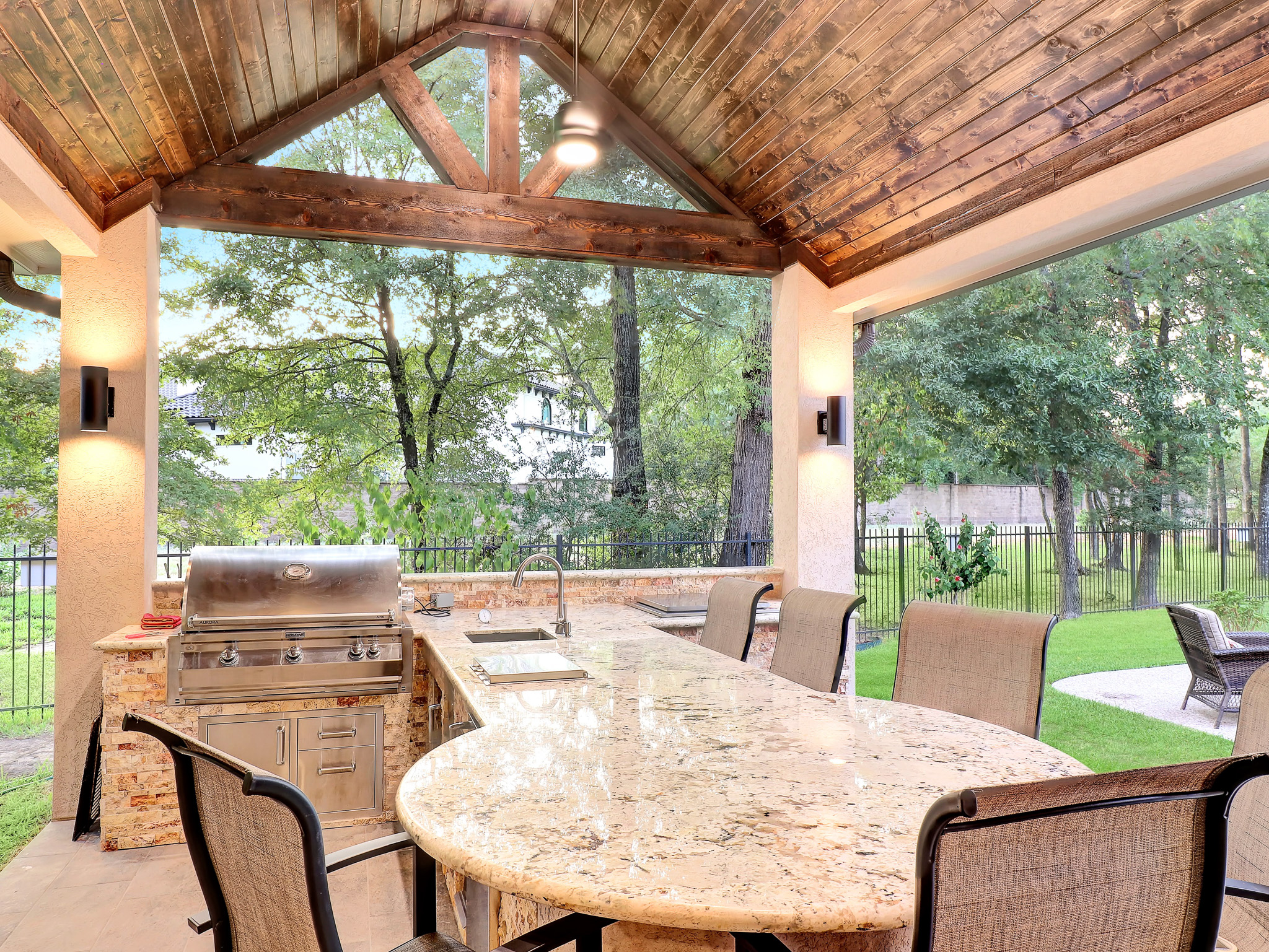
Today’s outdoor kitchens are designed with the same level of intention as indoor spaces. Layout, material durability, ventilation, and proximity to indoor areas all influence how functional and comfortable these spaces are.
Rather than focusing solely on appliances, the emphasis is shifting toward usability—ensuring the space supports gathering, cooking, and movement in a natural way.
Lighting That Extends Usability Into the Evening
Lighting plays a critical role in how outdoor spaces function after sunset. Well-designed lighting improves safety, highlights architectural features, and creates a comfortable atmosphere.
In Houston homes, lighting is often layered to support different uses. Pathway lighting enhances navigation, while overhead or wall-mounted fixtures provide general illumination. Accent lighting can highlight landscaping and architectural details, adding depth and visual interest.
When coordinated with interior lighting, outdoor spaces feel more cohesive and inviting. Many of the same principles that guide interior lighting design also apply outdoors, particularly when considering how light shapes both function and experience. These ideas are explored further in High-Impact Lighting Design for Houston Homes: How to Get It Right in 2026, where lighting is approached as an essential part of residential architecture.
Material Selection for Durability and Comfort
Houston’s climate places unique demands on exterior materials. Heat, humidity, and sun exposure require materials that are both durable and low-maintenance.
Natural stone, treated wood, composite decking, and weather-resistant finishes are commonly used to maintain performance over time. At the same time, materials are selected for comfort—reducing heat retention, improving traction, and aging gracefully.
These decisions are closely tied to broader climate-responsive design strategies, as explored in Designing for the Gulf Coast: How to Create Homes That Handle Heat, Humidity, & Storms, where material performance plays a key role in long-term durability.

A Few Common Questions About Outdoor Living Design in Houston
How much shade do I really need for an outdoor space in Houston?
More than most homeowners initially expect. Without proper shade—whether from structure or landscaping—outdoor spaces can become difficult to use during much of the year. Planning for shade early is one of the most important design decisions.
Are outdoor kitchens still worth including in a custom home?
Yes, especially in Houston. When designed as part of the overall layout, outdoor kitchens remain one of the most functional and frequently used exterior features, particularly for entertaining.
What makes an outdoor space feel connected to the home?
Consistency in materials, thoughtful transitions, and aligned lighting all play a role. When indoor and outdoor spaces are designed together, the result feels cohesive rather than separate.
Creating Outdoor Spaces That Support Everyday Living—and Last
The most successful outdoor spaces are designed around how homeowners actually live. In Houston, that often means balancing areas for entertaining, relaxing, and everyday use within a cohesive environment.
At the same time, long-term performance is just as important as immediate usability. Houston’s climate requires careful coordination of structure, drainage, materials, and lighting to ensure outdoor spaces remain comfortable and durable over time.
At Arte Architecture, outdoor living areas are designed as part of the overall architectural framework. From patio layout and roof structures to lighting integration and material continuity, these elements are considered early to ensure both function and longevity.
When outdoor spaces are integrated into the architecture from the beginning, they become an essential part of the home—enhancing daily living while holding up over time.
