
Integrating Smart Home Technology in Custom Houston Homes
Smart home technology is no longer a novelty in custom residential design—it’s becoming an expected part of how homes function. In Houston, where climate control, energy efficiency, security, and comfort all play major roles in daily life, technology can significantly improve how a home performs.
The key distinction, however, is integration. The most successful smart homes aren’t built around individual devices. They’re designed around coordinated systems that work quietly in the background and support the way homeowners actually live.
For anyone planning a custom home in the coming years, understanding how smart home design in Houston fits into the architectural process is essential.
What “Smart” Really Means in 2026
In today’s custom homes, “smart” no longer means complicated. Houston homeowners are increasingly prioritizing systems that simplify daily routines rather than add layers of control.
Lighting that adjusts throughout the day, climate systems that respond to occupancy and outdoor conditions, automated shading that manages heat gain, and discreet security and monitoring systems are now expected to operate intuitively. The most effective modern home systems in Houston focus on reliability, ease of use, and adaptability—not novelty.
A well-designed smart home should feel intuitive, not technical.
Why Smart Home Design Needs to Start Early
One of the most common missteps in residential technology planning is treating it as a late-stage upgrade. Wiring paths, lighting layouts, HVAC zoning, control panels, and equipment locations all influence—and are influenced by—the home’s architecture.
When smart systems are considered during the design phase, they integrate naturally into ceilings, walls, and floor plans. When they’re added later, compromises often follow: visible hardware, awkward switch placement, limited system flexibility, and reduced performance.

In many homes, technology decisions are made by multiple vendors working independently. Without architectural coordination, systems may function individually but fail to operate cohesively. Lighting, HVAC, shading, and automation can end up competing rather than complementing one another. Early planning reduces these conflicts and protects long-term performance.
This emphasis on early coordination reflects the importance of defining scope and priorities before construction begins. As discussed in Avoid Scope Creep: How to Keep Your Custom Home Remodel on Time and Budget, clarity upfront helps protect budget, usability, and long-term value—especially when integrating complex systems like home technology.
Smart Technology and Houston’s Climate
Houston’s heat and humidity make integrated technology particularly valuable. Automated shading and lighting controls help manage solar exposure throughout the day, while zoned HVAC systems improve comfort and energy efficiency. Leak detection and monitoring systems can also prevent costly moisture-related damage before it escalates.
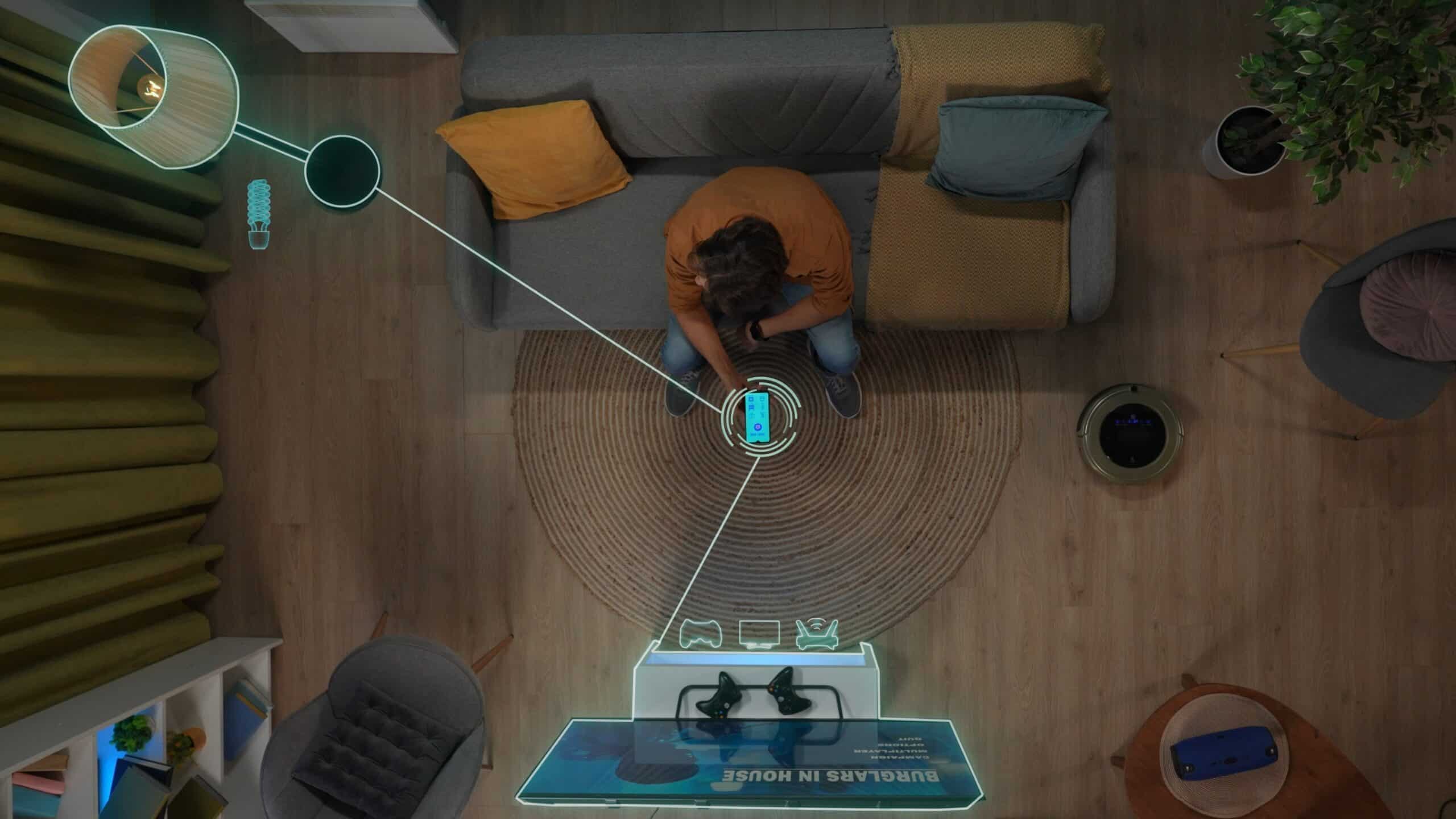
Technology plays a growing role in resilience as well. Smart electrical panels, system monitoring, and coordination with backup power sources allow homeowners to respond quickly during extreme weather events.
Many of the principles guiding these decisions align with those discussed in Designing for the Gulf Coast: How to Create Homes That Handle Heat, Humidity, & Storms, where performance and climate responsiveness are central to good residential design.
Designing for Simplicity, Not Complexity
A common misconception is that a highly automated home must feel complex. In practice, the opposite is true. The most successful smart homes feel intuitive because their systems are centralized, clearly organized, and visually unobtrusive.
Rather than filling a home with visible devices, thoughtful integration hides infrastructure and prioritizes user experience. Lighting, climate, security, and audio respond naturally without requiring constant interaction—allowing technology to support daily life without drawing attention to itself.

Simplicity isn’t about limiting capability. It’s about ensuring systems work seamlessly with the architecture rather than competing with it.
Future-Proofing Custom Homes in Houston
Technology will continue to evolve, but homes designed with flexibility in mind are better positioned to adapt. Planning for future upgrades through dedicated equipment spaces, adaptable infrastructure, and intentional system layouts allows technology to change without major renovation.
Future-proofing isn’t about predicting every new device. It’s about creating a framework that can evolve with minimal disruption as needs and technology change.
The Architect’s Role in Smart Home Integration
Smart home technology isn’t just a technical decision—it’s an architectural one. Lighting automation affects ceiling design and fixture placement, while shading systems influence window sizing and elevations. Equipment rooms require proper space, ventilation, and access long before walls are framed, and even wiring paths shape how clean or cluttered a finished space feels.
When these decisions aren’t coordinated early, technology often competes with the architecture instead of supporting it. Controls end up in awkward locations, ceilings become overworked, and systems become harder to upgrade over time. When technology is planned alongside layout, structure, and materials, smart systems fade into the background—doing their job without calling attention to themselves.
At Arte Architecture, technology is considered part of the architectural framework, not an add-on. Our expert architectural services coordinate systems, structure, and design from concept through documentation so homes remain intuitive, adaptable, and visually calm. This integrated approach can be seen throughout Arte’s Residential Portfolio and reflected in the experiences shared through Arte’s reviews.
Smart Homes That Support Everyday Living
In Houston, smart home technology delivers the most value when it enhances comfort, safety, and efficiency quietly and consistently. Lighting adjusts to the rhythm of the day. Climate systems maintain comfort without constant attention. Security integrates seamlessly into the home’s design.
When technology is coordinated alongside architecture, materials, and climate considerations, smart homes don’t feel high-tech—they feel well designed.
