
Designing Industrial Facilities from the Ground Up in Houston: What Every Owner Needs to Know Before Breaking Ground
Houston’s industrial market continues to expand at a remarkable pace. Manufacturing vacancy rates remain historically low, demand for office-warehouse space continues to grow, and new industrial development is reshaping major corridors across the region.
But industrial projects today are no longer just about constructing a functional shell. Businesses are expecting more from their facilities — better operational flow, stronger long-term flexibility, improved client-facing environments, and buildings that perform reliably under Houston’s climate conditions.
For owners, developers, and operators planning a ground-up industrial facility, the architectural decisions made early in the process often determine whether a building supports the business effectively for years to come.
This guide explores the major planning and design considerations involved in industrial facility design in Houston — from structural systems and site planning to office-warehouse integration and long-term building performance.
When Ground-Up Construction Makes Sense
Not every industrial project requires new construction. In some situations, adaptive reuse offers meaningful advantages, particularly when an existing commercial or warehouse shell already provides the infrastructure, access, and structural framework a business needs.
Those considerations are explored further in Adaptive Reuse in Houston: Converting Commercial Shells into Modern Workspaces & Light-Industrial Facilities, where existing buildings are reconfigured for modern industrial use.
Ground-up construction becomes the stronger option when the operation requires conditions an existing building cannot realistically provide. Clear heights, specialized column spacing, dock relationships, equipment layouts, and integrated office-warehouse planning all influence whether retrofitting becomes impractical or operationally limiting.
In those cases, designing from the ground up allows the building to support the operation directly rather than forcing the operation to adapt around an inherited structure.
Choosing the Right Structural System
For most industrial projects in Houston, the structural system discussion centers on two primary approaches: pre-engineered metal buildings (PEMB) and concrete tilt-wall construction.
Both systems are proven performers in the Texas market, but they serve different priorities.
Pre-engineered metal buildings are widely used because they are efficient, cost-effective, and relatively fast to construct. They are especially common for owner-occupied warehouses, service facilities, and manufacturing operations where speed to occupancy is important.
Tilt-wall construction, by contrast, creates a more permanent and durable concrete envelope. These facilities often offer stronger long-term flexibility, enhanced durability, and a more substantial visual presence — qualities that matter for larger facilities, multi-tenant buildings, and long-term investment properties.
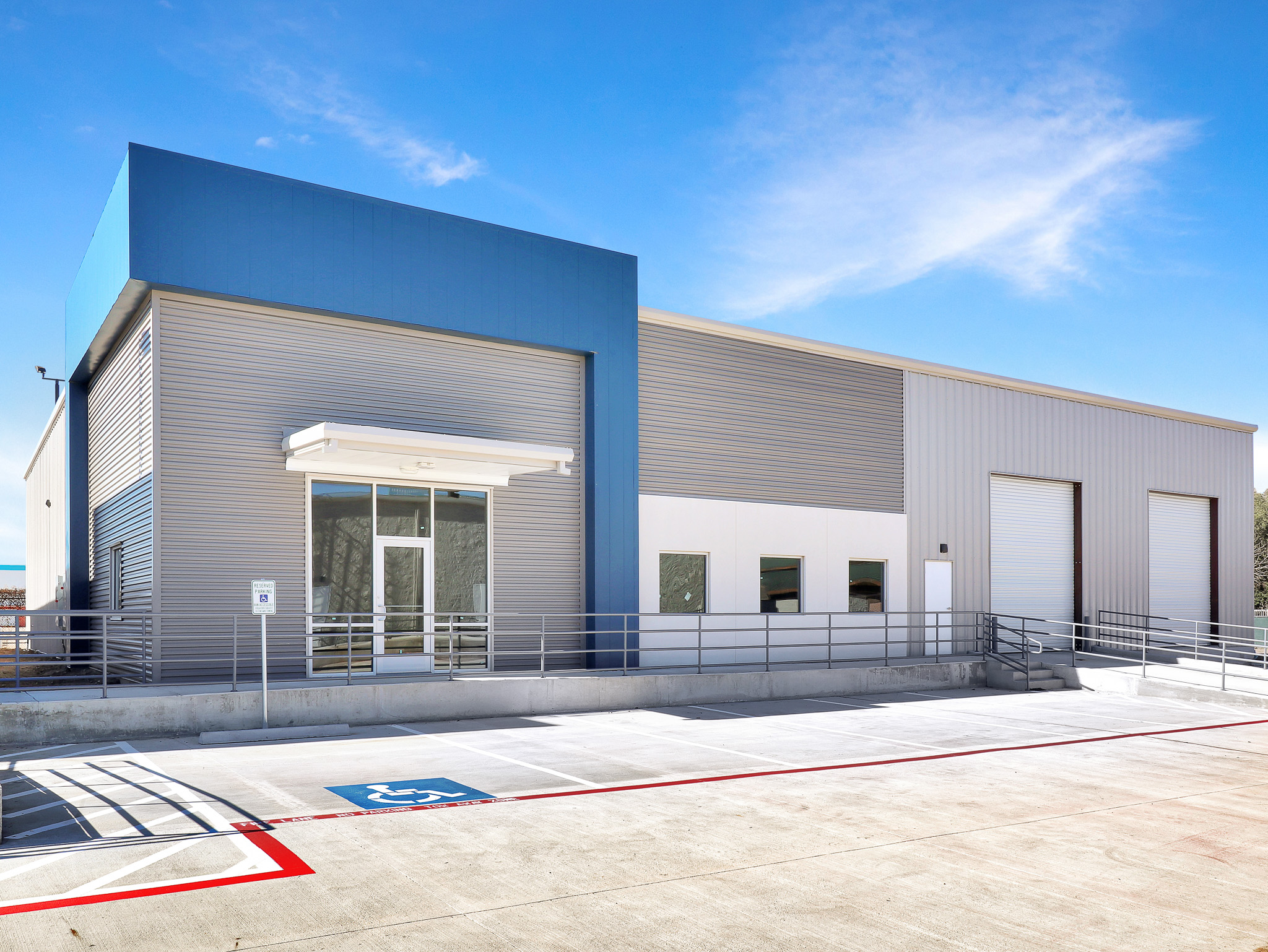
The right solution depends on the project’s operational needs, budget, timeline, and long-term goals. The architectural role is not simply selecting a structural system, but evaluating how that system supports the business over time.
Site Planning: One of the Most Important Decisions in the Project
Industrial buildings succeed or fail operationally long before construction begins. In many cases, the quality of the site plan determines how efficiently a facility functions for decades.
In Houston’s industrial market, site conditions vary widely. Floodplain exposure, access limitations, irregular lot geometry, and drainage requirements all influence how a property can be developed.
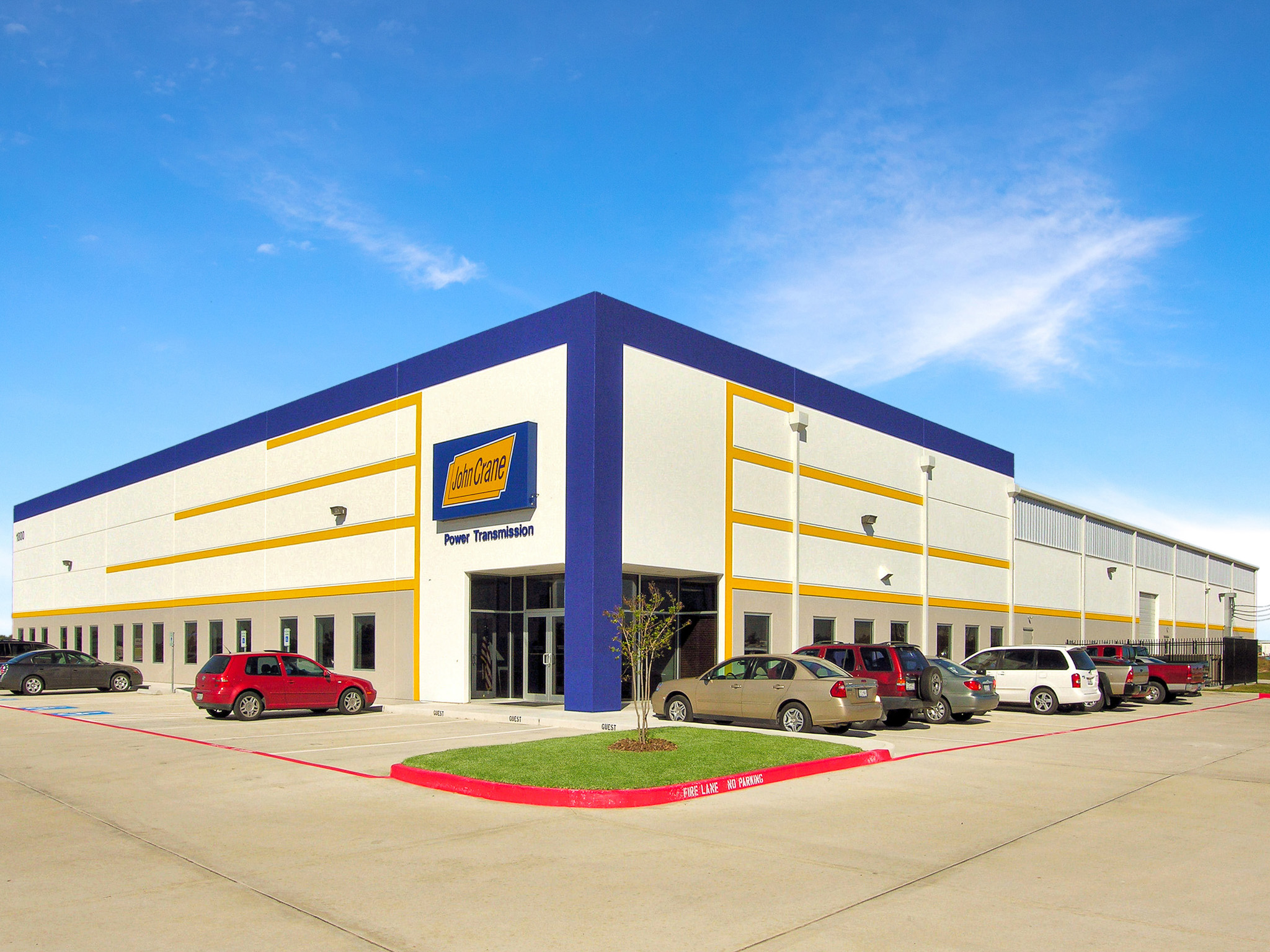
Truck circulation is often the central planning issue. Loading dock placement, truck court depth, employee parking, visitor access, and trailer maneuvering all need to work together without conflict.
These decisions are not just operational — they are architectural. Building orientation, grade relationships, frontage visibility, and the relationship between the structure and the site boundary all affect how efficiently the property performs.
A poorly positioned building can eliminate functional truck circulation entirely. Improper dock orientation can increase weather exposure and operational inefficiencies. Public-facing loading areas can negatively impact both security and professional appearance.
Houston’s drainage and floodplain conditions add another layer of complexity. Finished floor elevations, detention requirements, and impervious cover limitations can significantly influence project cost and site feasibility before vertical construction even begins.
Understanding these constraints early helps avoid expensive redesigns and operational compromises later.
Designing the Office-Warehouse Relationship
Demand for hybrid office-warehouse facilities continues to increase across Houston. Many industrial buildings now combine administrative space, operational functions, storage, technical work areas, and client-facing environments within a single facility.
Designing these spaces successfully requires more coordination than many owners initially expect.
When office and warehouse environments are treated as separate pieces, the transition often feels disconnected — a front office attached to a warehouse rather than an integrated facility. When planned cohesively, however, the building presents a unified identity that supports both operations and professional presentation.
This coordination affects more than appearance. Office and warehouse areas often require different structural spans, mechanical systems, thermal separation strategies, lighting conditions, and acoustic considerations.
In Houston’s climate, these details matter. Warehouse access doors left open during summer months can significantly affect adjacent office cooling loads if the building is not properly designed to manage that transition.
Determining the appropriate office-to-warehouse ratio is also an important planning decision. Too much office space creates unnecessary construction cost. Too little can limit future growth and create pressure for costly additions later.
The relationship between flexibility, functionality, and design quality in these environments is explored further in Light Industrial Spaces: Where Creativity Meets Function in Houston.
Building for Houston’s Climate
Industrial facilities in Houston must perform under sustained heat, high humidity, intense rainfall, and periodic severe weather events. Treating industrial buildings as simple enclosures rather than climate-responsive structures often creates long-term maintenance and operational problems.
Roof systems, wall assemblies, drainage strategies, and dock conditions all influence long-term building performance.
For metal building systems, insulation and vapor management are critical to preventing condensation-related issues. Tilt-wall systems require careful joint detailing and sealant coordination to prevent water infiltration as materials expand and contract over time.
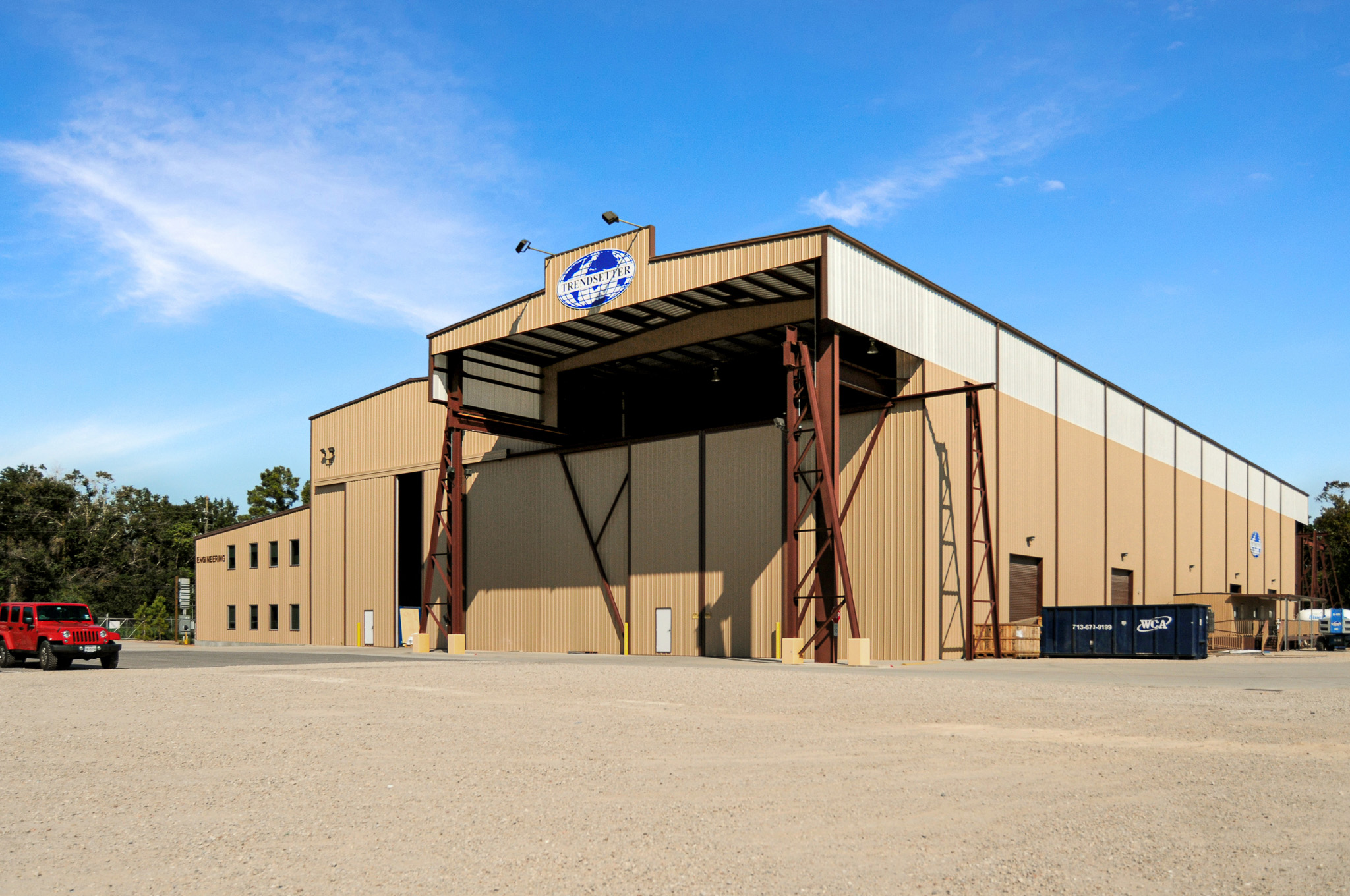
Drainage design is equally important. Roof systems and site drainage must account for Houston’s high-intensity rain events rather than average annual conditions.
Dock areas also require careful specification. Door seals, levelers, hardware, and weather protection all influence energy efficiency, moisture control, and operational reliability.
The good news is that Houston’s industrial market has decades of experience building in these conditions. The challenge is ensuring these best practices are coordinated early and documented properly before construction begins.
Understanding Houston’s Regulatory Environment
Industrial development in the Houston area involves a layered regulatory process that varies significantly depending on jurisdiction.
Projects within the City of Houston, surrounding municipalities, and unincorporated county areas may all operate under different review processes, development standards, and permitting requirements.
Most industrial projects require architectural and structural review, fire marshal coordination, and mechanical, electrical, and plumbing permits. Sites located within FEMA flood hazard areas also require floodplain permitting and compliance with finished floor elevation standards.
Houston’s regulatory structure is also unique because the city operates without traditional zoning. Instead, development is shaped through deed restrictions, development standards, and use-specific regulations.
Because these conditions vary significantly from site to site, regulatory analysis is most effective when it happens early — ideally before property acquisition or final site selection.
What an Architect Actually Contributes to an Industrial Project
Some industrial projects proceed with minimal architectural involvement under the assumption that structural engineers, fabricators, or contractors can manage the design requirements independently.
In some cases, that approach can produce a code-compliant building. But it rarely produces a fully coordinated one.
The architectural contribution to an industrial facility is not primarily aesthetic. It is integrative.
Architects coordinate the relationship between site planning, building program, structural systems, mechanical and electrical requirements, envelope performance, operational workflow, and long-term usability. That coordination reduces ambiguity during construction and helps prevent costly field conflicts, delays, and redesigns.
Three-dimensional visualization also plays an increasingly important role during the pre-construction phase. Understanding how loading areas relate to grade, how office entries present from the street, or how equipment interacts with structural bays is often far easier in three-dimensional modeling than through flat drawings alone.
At Arte Architecture, industrial projects are approached through this broader planning lens. The firm’s industrial services include preliminary planning, 3D visualization, and full construction documentation for office-warehouse facilities, manufacturing buildings, distribution centers, pre-engineered metal buildings, and tilt-wall construction.
This integrated approach can be seen throughout Arte Architecture’s industrial portfolio and reflected in the experiences shared through client reviews.
The Long-Term Value of Industrial Design Quality
Industrial facilities are long-term assets. The decisions made during the design phase influence operations, maintenance, adaptability, and long-term property value for decades.
In Houston’s current industrial market, facilities that function efficiently, adapt to changing operational needs, and present professionally are increasingly distinguishing themselves from buildings designed only to minimum standards.
Owners who approach industrial architecture as a planning investment rather than a permitting requirement typically achieve stronger long-term outcomes. The building becomes aligned with the operation itself rather than forcing the operation to work around the building.
For companies evaluating a ground-up industrial project in Houston, involving the architectural team early — before site decisions and construction assumptions are finalized — often creates the clearest path toward long-term performance and operational success.
Frequently Asked Questions About Industrial Design
What is the typical timeline for designing a ground-up industrial facility in Houston?
Most owner-occupied industrial projects in the 10,000–50,000 square foot range require approximately 8–16 weeks for programming, planning, and permit-ready construction documents. Larger or more complex facilities typically require additional coordination.
Is a pre-engineered metal building or tilt-wall system better for industrial construction?
Neither system is universally better. PEMB systems are often more cost-effective and faster to construct, while tilt-wall facilities generally offer greater durability, long-term flexibility, and stronger market perception. The right solution depends on the operational goals of the project.
Does Houston’s floodplain affect industrial facility design?
Yes. Floodplain designation can influence finished floor elevations, drainage requirements, grading strategy, and foundation design. Understanding floodplain conditions early is an important part of industrial site due diligence.
Why involve an architect early in an industrial project?
Early architectural planning helps coordinate site conditions, operational workflow, structural systems, and long-term building performance before construction begins. This often reduces costly changes later and creates a more functional facility overall.
Arte Architecture is a Houston-based architectural design firm specializing in industrial, commercial, and residential projects across the greater Houston area, including The Woodlands, Katy, Cypress, Sugar Land, Pearland, and surrounding communities.
