
Renovate or Move? How Houston Homeowners Are Making the Call in 2026
The question has never been more relevant – or more financially loaded. Across Houston, homeowners who bought or refinanced in 2020 or 2021 are sitting on mortgage rates they have no intention of giving up. With current rates hovering well above what most of them locked in, selling means not just finding a new home in a market with limited inventory, but absorbing a monthly payment that could be hundreds of dollars higher on a comparable property in a comparable neighborhood. So instead of moving, they’re looking around at the homes they already own and asking a different question:
What if we just made this one work?
The numbers tell the story clearly. A Redfin survey published in April 2026 found that approximately 80% of homeowners with a mortgage hold a rate below current market levels. Roughly 65% of those who completed a renovation in the past year said they upgraded their existing home specifically instead of moving. Among those planning a renovation in the next twelve months, 71% said they were remodeling in lieu of purchasing a new home. Harvard’s Joint Center for Housing Studies puts total annual homeowner improvement spending at $522 billion – still at historic levels even as the pace of growth moderates.
In Houston, this dynamic layers on top of a housing market that already has tight inventory, strong long-term appreciation in established neighborhoods, and a broad stock of homes built in the 1980s and 1990s that are structurally sound but increasingly due for meaningful updates. The result is a city full of homeowners genuinely weighing a major decision – and often making it without the architectural perspective that would help them make it well.
This guide is for those homeowners. Not a sales pitch for renovation, and not a case for always moving. A clear-eyed look at how to evaluate the question from the ground up.
Why Are So Many Houston Homeowners Choosing to Stay and Renovate Right Now?
The short answer is math. Selling a home in Houston carries real transaction costs that are easy to underestimate when you’re focused on the listing price: agent commissions typically run 5–6%, closing costs on the buy side add another 2–3%, and moving expenses are rarely trivial. When you layer in the rate differential – the gap between your existing mortgage and what a new loan at today’s rates would cost on a comparable home – the financial argument for staying put becomes compelling for many households. On a $400,000 mortgage balance, a two to three point rate increase can represent $700 to $900 per month in additional carrying cost. Over a decade, that figure becomes material.
The longer answer involves something less quantifiable. Houston homeowners who have spent years in an established neighborhood – good schools, familiar commutes, community ties, proximity to family – often find that what they want to leave isn’t really the neighborhood, the yard, or the location. It’s the kitchen layout. The primary bathroom that hasn’t been touched since 2003. The third bedroom that would work perfectly as a home office if only the wall between it and the hallway weren’t where it is. These are problems a well-planned renovation can solve. Uprooting to fix them is, in many cases, a much more expensive and disruptive solution than addressing them directly.
That said, staying isn’t always the right answer. The goal of any thoughtful evaluation is to understand which category your situation falls into – and that requires more than an online home value estimate and a conversation with a real estate agent.
What Does It Actually Cost to Move vs. Renovate in Houston?
Before this decision can be made clearly, both sides of it need real numbers.
The true cost of moving is consistently underestimated. Beyond agent commissions and closing costs, consider: staging a home for sale, potential repairs flagged during the inspection process, temporary housing if the timing between sale and purchase doesn’t align cleanly, and – most significantly in today’s market – carrying a new mortgage at a rate meaningfully higher than your current one.
Renovation costs in Houston vary widely based on scope, finish level, and which part of the home is being addressed. As a general framework for 2026: minor cosmetic refreshes – paint, fixtures, flooring – typically run $15,000 to $40,000. Mid-range single-room overhauls, such as a complete kitchen or bathroom remodel with quality but not luxury finishes, typically fall between $40,000 and $100,000. Major renovations involving structural changes, multiple room overhauls, high-end finishes, or additions range from $100,000 to $300,000 and above. Houzz’s 2026 renovation research found that kitchens commanded a median spend of $24,000 nationally (up from $22,000 in 2024), with primary bathrooms at $15,000 (up from $13,000).
The real comparison isn’t simply “what does the renovation cost?” versus “what does moving cost?” It’s: what does the renovation produce in terms of improved livability and long-term value, relative to what moving would cost to achieve a comparable result? In many Houston scenarios – particularly where location and lot are strong and the home’s bones are sound – renovation wins that comparison with room to spare.
When Does Renovating Your Houston Home Make the Most Sense?
Renovation is the stronger path when several conditions align.
The location is one you’d choose again. The neighborhood serves your life well – schools, commute, community, proximity to family. Moving would mean either accepting a worse location or paying a significant premium for a comparable one.
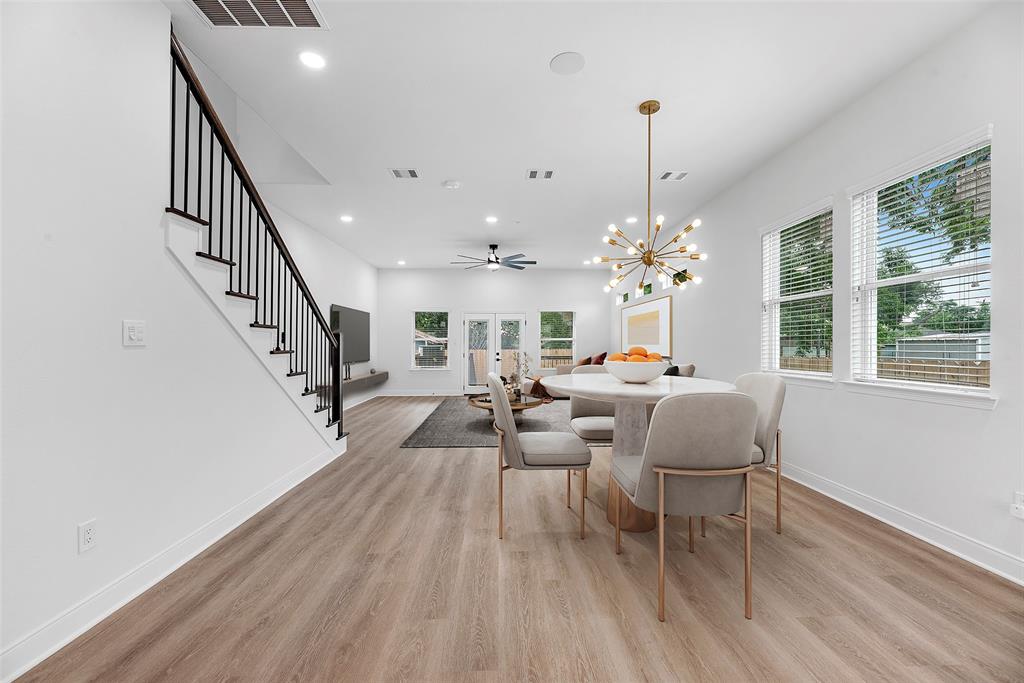
The home’s structure is fundamentally sound. A solidly built home from the 1980s or 1990s with a good foundation, functional systems, and adequate square footage is an excellent candidate for renovation. Finishes and layout can be transformed without addressing the underlying structure, which is where costs compound quickly.
The home can physically accommodate what you actually need. This is the part of the equation that benefits most from architectural thinking. A home that needs a larger kitchen, an additional bedroom, an improved connection to the backyard, or a more functional primary suite may be entirely capable of delivering those outcomes through a well-designed addition or remodel. Understanding what’s structurally and programmatically possible requires looking at the home as a design problem – not just a square-footage calculation.
Your time horizon is long enough for the investment to mature. Homeowners who plan to stay seven or more years have time for the value of improvements to compound meaningfully. Those with a shorter horizon need to weigh renovation costs against what they’d realistically recapture at resale.
The renovation addresses a real, persistent problem – not a passing preference. Kitchen layouts that don’t work, primary suites that can’t accommodate how a family actually lives, outdoor spaces that are technically present but functionally unusable in Houston’s climate: these are worth solving architecturally. Aesthetic preferences that shift every few years are a different investment thesis.
When Does Moving to a New Home Actually Make More Sense?
The honest case for moving deserves the same clarity.
If the neighborhood is no longer right for your life – schools have changed, commute requirements have shifted, the family’s geographic needs have evolved – renovation can improve the home but cannot relocate it. Location is the one thing architecture cannot fix.
If the home’s physical constraints are genuinely insurmountable, renovation becomes an expensive exercise in working around limitations rather than resolving them. A home on a lot with no room to expand, in a neighborhood with deed restrictions that prohibit additions, or on a footprint that simply cannot yield the program a family needs may be the wrong container for the life being lived in it.
If the cost of achieving what you actually want exceeds what a comparable renovation-ready or new-construction home would cost to acquire – accounting honestly for the rate differential and transaction costs on both sides – moving may pencil out. This scenario is less common than it initially appears, but it does exist.
If there are structural, drainage, or foundation issues requiring substantial remediation before meaningful renovation work could even begin, costs compound in ways that shift the calculation. Getting the home to a functional baseline before upgrading it is a different budget conversation than renovating a home that’s structurally ready.
The goal of any pre-decision evaluation is to surface these realities before money is committed – not to discover them mid-construction.
What Types of Home Improvements Add the Most Long-Term Value in Houston?
For homeowners who have determined that renovation is the right direction, the next question is where to invest. Not all renovation dollars produce equal returns, and Houston’s climate and market conditions influence what performs best over time.
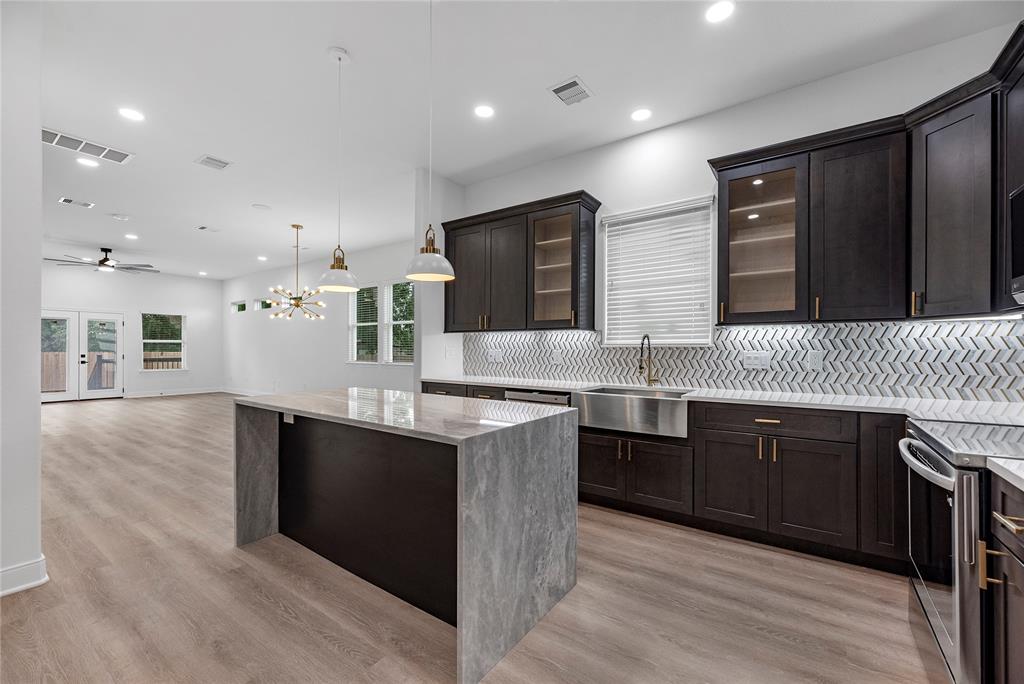
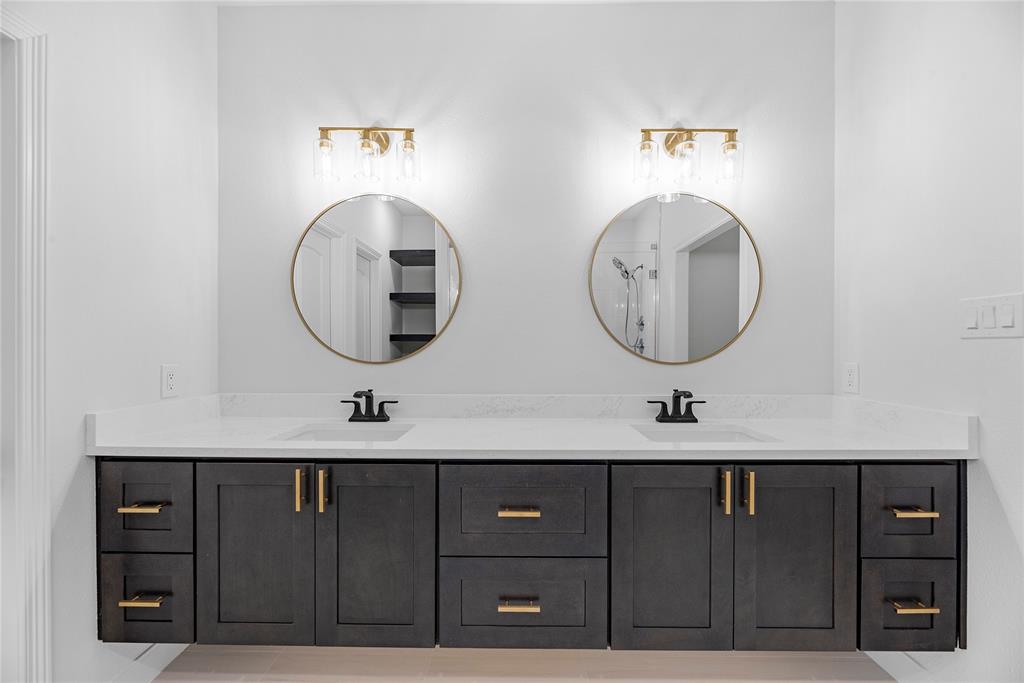
Kitchens and primary bathrooms consistently lead in both homeowner satisfaction and resale value contribution. A kitchen that functions well and serves the way a household actually lives is among the highest-return investments in residential renovation. The same holds for primary bathrooms – particularly those updated with finishes suited to Houston’s humidity rather than materials that look beautiful at completion and deteriorate within a few years.
Additions that create genuinely usable square footage – a primary suite expansion, a dedicated home office, a family room that connects properly to the kitchen, or a multigenerational suite – tend to recover their costs well in Houston’s market, where buyers consistently prioritize functional layout over raw size. The architectural and practical considerations involved in designing addition space for multiple generations are covered in depth in Designing for Everyone: A Guide to Multigenerational Home Design in Houston.
Outdoor living improvements deserve specific mention for Houston homeowners. A covered patio with appropriate shade design, a functional outdoor kitchen, and thoughtful lighting can effectively extend a home’s livable footprint by several months per year – and they are among the most visible differentiators at resale in this market. The design principles behind getting that investment right are explored in Houston Outdoor Living Design Tips for 2026.
Envelope improvements – insulation, roofing systems, window upgrades, HVAC replacement – may carry the least visual drama of any renovation investment, but they produce the most consistent long-term performance value in a Houston climate. A home that runs efficiently and comfortably through Houston summers is a meaningfully different asset than one that doesn’t. The architectural logic behind designing for this environment is grounded in Designing for the Gulf Coast.
Can Your Houston Home Actually Support the Renovation You’re Envisioning?
This is the question too many homeowners skip – and where the most expensive surprises originate.
Every renovation has a physical reality check embedded in it. A kitchen expansion requires knowing where load-bearing walls are. An addition requires knowing whether the existing foundation can be extended, whether the lot’s remaining coverage allows more footprint, and whether applicable deed restrictions permit the configuration being considered. A second-story addition requires evaluating whether the existing ground-floor structure can bear the additional load.
Houston’s regulatory environment adds a specific layer. Deed restrictions govern a significant portion of residential Houston and vary widely by neighborhood – some prohibit detached structures, some cap total lot coverage, some regulate height and setbacks in ways that aren’t visible from the street. Floodplain designations affect finished floor elevation requirements for any addition that increases a home’s footprint, and a significant portion of Houston-area residential properties sit in or adjacent to flood-sensitive zones. Understanding these constraints before committing to a renovation scope – not after – is the kind of early clarity that prevents expensive mid-project course corrections.
HVAC capacity is a practical constraint renovation projects regularly underestimate. Adding square footage to a home places demand on mechanical systems sized for the original footprint. In Houston’s climate, an undersized system doesn’t just create discomfort; it creates ongoing energy costs and maintenance issues that quietly erode the value of the improvement.
Understanding what a home can support – structurally, mechanically, and from a regulatory standpoint – before committing to a renovation path is precisely what an architectural evaluation provides.
What Does the Architectural Design Process for a Houston Remodel or Addition Actually Look Like?
For homeowners who haven’t previously worked with an architect on a residential project, understanding the process helps clarify why it matters – and why it should happen before contractor bids are solicited.
The process begins with programming: understanding what the homeowner actually needs the space to do, how the family uses the home day to day, and what specific limitations of the current layout are driving the project. From that foundation, preliminary design concepts are developed and refined through three-dimensional documentation – the stage at which a homeowner can genuinely see what they are committing to before anything structural is touched. This is where scope, cost, and outcome align, and where changes are still inexpensive to make.
Construction documents translate the approved design into the coordinated set of drawings a contractor needs to build accurately and that the permitting authority requires for review. This documentation covers architectural design, structural coordination, and the details that prevent costly field questions when a contractor reaches a point the drawings didn’t anticipate. The specifics of navigating Houston’s permitting process – from the Houston Permitting Center to deed restriction compliance and floodplain requirements – are covered in Managing Building Permits, Codes, and Approvals in Houston.
The cost of skipping this process is well documented. Committing to a renovation scope without resolved design documentation is one of the most consistent predictors of budget overruns and contractor disputes – regardless of experience level on either side. As Avoid Scope Creep: How to Keep Your Custom Home Remodel on Time and Budget outlines, the gap between a contractor’s rough estimate and a project’s final cost most often originates in decisions that weren’t made before construction began.
Arte Architecture’s home addition and remodel services cover this full process – from preliminary design and 3D documentation through construction drawings and permit coordination – for residential projects across Houston and the surrounding communities. The firm’s residential portfolio reflects the range of project types involved, and the experiences shared in client reviews speak to what that process looks like in practice.
What Should You Do Before You Commit to Either Path?
The single most valuable step before engaging a real estate agent to list, before calling contractors for renovation bids, before mentally committing to either direction – is an architectural evaluation of your current home.
That evaluation answers the questions neither a realtor nor a contractor is positioned to answer well: What can this home support structurally and programmatically? What would achieving your goals actually cost, and what would it look like in three dimensions, before any money is spent on construction? Are there constraints – deed restrictions, floodplain, structural limitations – that would affect the scope or cost of the renovation you’re imagining?
With those answers in hand, the decision between renovating and moving stops being a guess and becomes an informed choice. Some homeowners emerge from that evaluation with a clear renovation path and genuine confidence to pursue it. Others learn that their home’s constraints make moving the more practical option – with that knowledge confirmed before renovation dollars are committed, not after. Occasionally, an evaluation reveals that a home can do significantly more than its current condition suggests, opening possibilities that change the calculation entirely.
The earlier in the decision process this evaluation happens, the more useful it is. Once a contractor has been engaged, once a scope has been informally sketched, once a timeline has been mentally set – the flexibility to reconsider or resequence is already partially gone.
Houston homeowners working through this decision are welcome to connect with the Arte Architecture team early in that process. The conversation about what a home can become – architecturally, practically, and over the long term – is exactly where useful design thinking starts.
The Decision Isn’t Really About the Market – It’s About the Home
The “renovate or move” question gets framed as a real estate market question because that’s how most people first encounter it: rates are up, inventory is tight, prices are high. Those conditions matter. But they’re a backdrop, not a decision framework.
The more useful frame is architectural: does this home – this specific structure, on this specific lot, in this specific location – have the capacity to become what your life actually requires of it? And if it does, what does that transformation concretely cost and look like?
That question has a real, evaluable answer. It doesn’t require predicting interest rate movements or timing a market. It requires looking at the home honestly, understanding what it can support, and designing toward a clear outcome. In a Houston market where the majority of homeowners are staying put and investing in the homes they already own, the families who will look back on 2026 as a year well spent are the ones who approached that investment with clarity about what they were building toward – and with the architectural guidance to get it right.
Arte Architecture is a Houston-area architectural design firm specializing in residential remodels, home additions, and custom homes across Houston, The Woodlands, Katy, Cypress, Sugar Land, Pearland, and surrounding communities. Learn more about the firm’s services, portfolio, and team, or get in touch to start the conversation.
