
The Office-Warehouse Formula: How Houston Businesses Are Designing Hybrid Industrial Spaces That Actually Work
Walk through any of Houston’s growing industrial submarkets — Katy, Brookshire, Beltway 8 South, the Highway 290 corridor — and a pattern emerges. The most in-demand buildings aren’t pure warehouses or conventional offices. They’re hybrids: structures that house a professional operation at the front and a functional industrial or logistics operation behind it. Distributors. Service contractors. Specialty manufacturers. Medical equipment companies. Energy sector suppliers. The list of business types driving demand for office-warehouse space in Houston has been growing for years, and the construction market has followed.
What hasn’t kept pace is the design quality of many of these buildings. The dominant template — a metal building with a standard office package dropped into one corner — technically delivers an office and a warehouse in the same structure. What it rarely delivers is a building that actually serves how the business operates, presents the brand credibly to clients and employees, or performs efficiently over a ten-year horizon. The reason is almost always the same: the design was built around a generic product, not a specific operation.
This guide is for business owners and developers in Houston who are planning a ground-up office-warehouse facility and want to understand what separates a building that works from one that merely functions.
Why Is the Office-Warehouse Hybrid the Most In-Demand Industrial Format in Houston Right Now?
The shift toward office-warehouse demand in Houston reflects a structural change in how businesses operate — not a trend that will reverse when market conditions shift. Companies that once maintained separate office leases and warehouse leases have consolidated, driven by cost efficiency, operational integration, and the practical reality that their staff, inventory, and client-facing functions are most effective when they share a building.
The energy sector, which shapes Houston’s economy more than any other single industry, has been a consistent driver of this format. Service companies, equipment suppliers, and field operations teams all require professional administrative space alongside meaningful storage, staging, and logistics capacity. The same is true of the specialty contracting sector — mechanical, electrical, plumbing, HVAC, and specialty trade contractors whose businesses don’t fit cleanly into either a pure office or a pure warehouse.
Houston’s industrial market data reflects this demand. Office-warehouse formats — typically defined as buildings with 10% to 40% office component — have accounted for a growing share of new construction across the metro. Vacancy in this product type remains among the tightest of any industrial format. The businesses seeking these buildings are not looking for commodity space. They are looking for buildings that work for them specifically, which is a design problem as much as a real estate problem.
What Does “Office-Warehouse” Actually Mean — and Why Does the Definition Matter Before Design Begins?
The term office-warehouse covers a wide range of buildings, and the differences within that range have significant implications for cost, code compliance, and operational fit. A building that is 10% office and 90% warehouse is structurally, mechanically, and programmatically different from one that is 35% office and 65% warehouse — even if both are described by the same label.
The office percentage affects the building’s occupancy classification under the International Building Code, which in turn governs egress requirements, fire protection systems, ADA compliance scope, and restroom fixture counts. It affects the HVAC design, because office space requires conditioning to a different standard than warehouse space, and the thermal boundaries between the two zones must be designed explicitly rather than assumed. It affects the structural bay layout, because column spacing appropriate for warehouse clear spans is often incompatible with efficient office floor planning.
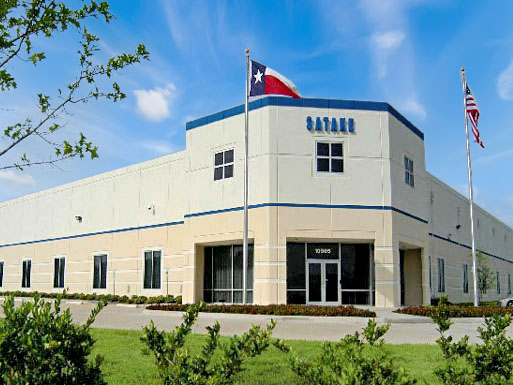
Understanding what the business actually requires — not what a standard product delivers — is the question that should open the design process. A business that conducts regular client meetings needs a different entry sequence and conference capacity than one whose clients never visit the facility. A business whose operations team moves frequently between office and warehouse needs a transition zone that doesn’t feel like passing through two unrelated buildings. These are programming questions that determine the proportions, and the proportions determine nearly everything else about the project.
How Do You Determine the Right Office-to-Warehouse Ratio for Your Business?
This is one of the most consequential decisions in an office-warehouse project, and it is frequently made too casually — either by defaulting to a standard package that a contractor offers, or by guessing based on rough square footage intuition. Neither approach reliably produces a building that serves the operation well over time.
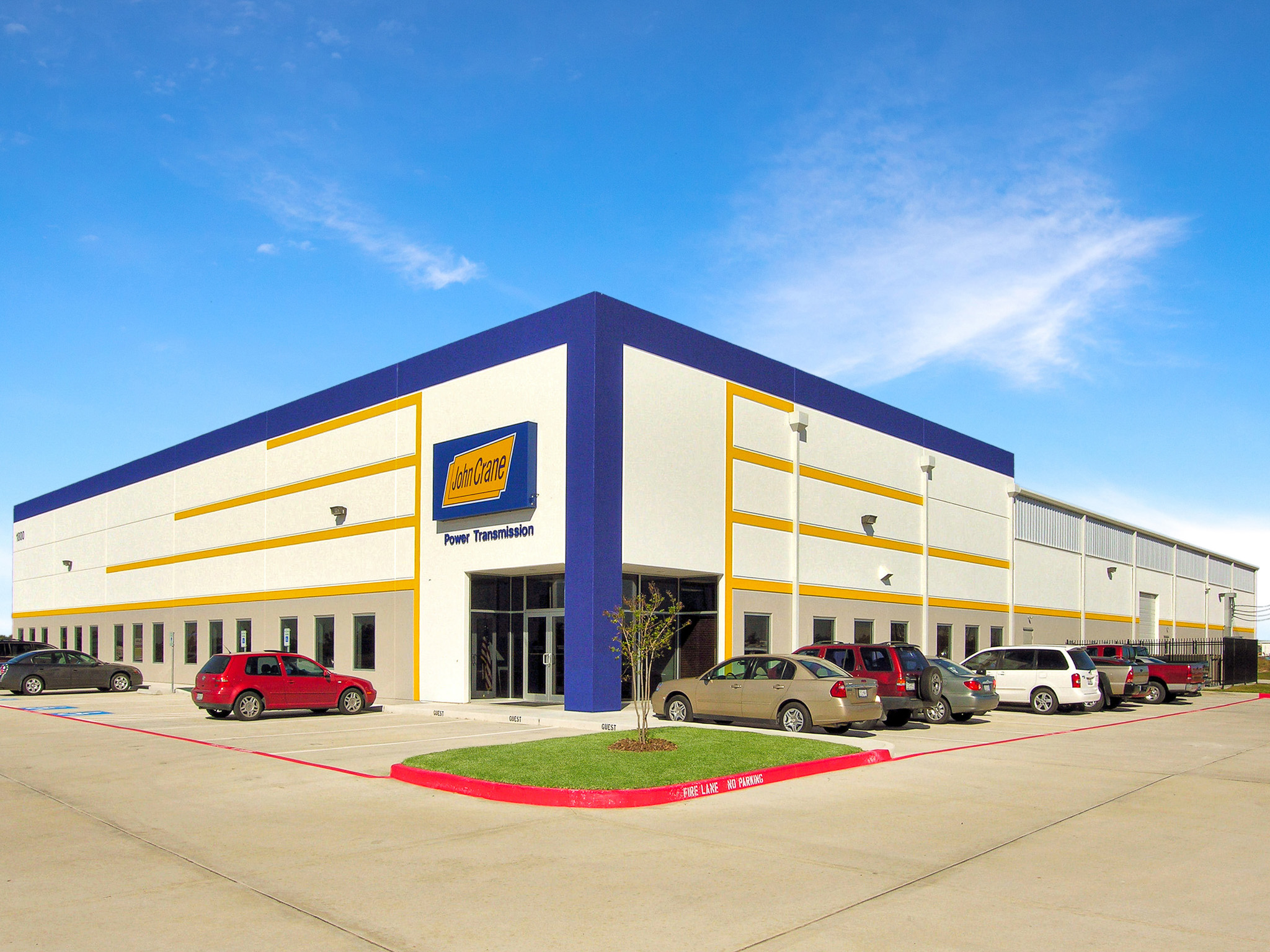
The right ratio emerges from a clear-eyed look at how the business actually functions. How many people work in the office full-time versus in the warehouse or field? How often do clients visit, and what does that visit experience need to communicate? Does the operation have a reception function, or do clients engage remotely? What administrative functions — estimating, project management, accounting, HR — need dedicated space, and how might those functions grow over the next five to seven years?
The growth question matters more than most owners initially anticipate. A building designed for a business’s current size, without adequate consideration of where that business will be in five years, produces one of two outcomes: a facility that the business outgrows quickly and can’t easily expand, or a facility with excess office space that becomes an inefficiency in the early years. Designing for the realistic future state — not the aspirational one, and not the conservative one — requires understanding the business’s trajectory, not just its current headcount.
The complement to the office-warehouse ratio question is whether the warehouse component has been properly programmed. Clear height, column spacing, dock count, drive-in door placement, floor load capacity, and staging area requirements are all operational specifications that should come from the business’s workflow, not from a standard spec sheet. As covered in depth in Designing Industrial Facilities from the Ground Up in Houston, these decisions belong in the design phase — not in a conversation with a contractor after documents are already in progress.
What Are the Most Common Design Failures in Houston Office-Warehouse Buildings?
Several patterns appear consistently in office-warehouse buildings that don’t perform well for their occupants, and most of them are design decisions made early in the process — or decisions that weren’t made at all and were left to default.
The office positioned as an afterthought. In many standard office-warehouse packages, the office component is located at the front of the building as a façade element, with minimal thought given to how it connects to the warehouse, how it manages the thermal boundary between the two zones, or how it presents to visitors. The result is a building that reads as a warehouse with a glass-front addition — not a business with a professional presence and an operational backbone.
Acoustic separation treated as a secondary concern. The noise profile of a warehouse — forklifts, dock activity, HVAC equipment, mechanical systems — is fundamentally incompatible with a productive office environment unless the separation between the two zones is designed explicitly. Wall assemblies, structural decoupling, and strategic floor plan positioning all contribute to acoustic performance. Buildings designed without this consideration produce offices that are uncomfortable to work in regardless of how well-finished they are.

Uniform ceiling heights across both zones. Warehouse operations typically require 24 to 32 feet of clear height. Office space functions best at 9 to 12 feet. Designing both zones to the same height either wastes expensive cubic footage in the office or limits operational flexibility in the warehouse. The building section should be designed to serve each zone at its appropriate scale.
A single restroom core that serves both occupancies inadequately.Office employees and warehouse workers have different proximity needs, different usage patterns, and in many cases different code requirements governing fixture counts. A single restroom configuration designed for one occupancy type frequently fails the other.
Neglecting the entry and reception experience entirely. The front entry of an office-warehouse is the brand. For businesses that receive clients, vendors, or prospective employees at the facility, the entry sequence communicates professionalism — or undermines it — before a single conversation takes place. This is an area where modest investment in design quality produces disproportionate returns.
How Does the Office Component Change the Building’s Structural and Mechanical Design?
This is where the integration challenge in office-warehouse design becomes most technically demanding, and where the value of coordinated architectural planning is clearest.
Structurally, office and warehouse zones have different bay requirements. Warehouse bays are typically designed on a 50-by-50-foot or larger grid to maximize clear span and minimize column interference with racking systems and equipment movement. Office floor plans work most efficiently on tighter structural grids — typically 30 feet or less — that allow partition flexibility without long structural spans. Where these two systems meet, the transition must be designed explicitly, both structurally and architecturally.
The HVAC design challenge in a Houston office-warehouse is particularly consequential. Office space requires conditioning to comfort standards — typically 72 to 74 degrees with humidity control — while warehouse space may be conditioned to a much lower standard, ventilated rather than cooled, or left unconditioned entirely depending on the product being stored. The thermal boundary between these two environments must be clearly defined in the building design and properly insulated and sealed. In Houston’s climate, an undefined or improperly detailed thermal boundary between a conditioned office and an unconditioned warehouse produces moisture problems, comfort failures, and energy costs that compound over the life of the building.
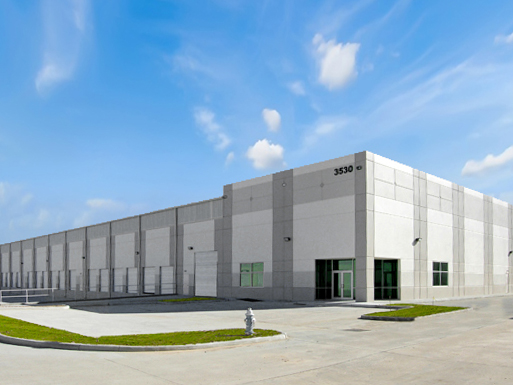
Plumbing and electrical design for the office component must also be coordinated from the outset. Office restrooms, break rooms, and potential kitchenette spaces require plumbing runs that are far more straightforward to route during construction than to add after a concrete slab has been poured. Data and electrical infrastructure — server room requirements, network closet placement, power density for workstations — should be part of the design conversation before foundation work begins.
What Does the Client-Facing Office Design Communicate About Your Business?
For businesses that receive clients at their facility — whether for sales presentations, project reviews, inspections, or partnership meetings — the office component of an office-warehouse building carries brand weight that is disproportionate to its square footage. A reception area that feels professional, a conference room that functions properly, and a transition from entry to office that doesn’t immediately expose the warehouse interior to visitors are not luxuries. They are basic requirements for a business that wants its facility to support its client relationships rather than undermine them.
The finish level of the office component should be calibrated to the business’s market position, not to a generic industrial standard. This doesn’t mean expensive materials — it means intentional ones. Flooring transitions between office and warehouse that are detailed cleanly rather than improvised. Ceiling heights in the office zone that feel appropriate rather than cavernous or compressed. Lighting designed for task performance and visual comfort rather than simply adequate illumination. These decisions shape how the building feels at the human scale — and how the business behind it is perceived by everyone who walks through the front door.
What Does the Permitting Process Look Like for a Houston Office-Warehouse?
Mixed-occupancy buildings — structures that combine an office occupancy (Group B under the IBC) with a warehouse or storage occupancy (Group S-1) — carry a more complex permitting pathway than single-occupancy industrial buildings. The permitting authority reviews the occupancy separation, the egress system for each zone, the fire protection design, and the accessibility compliance for the office component. These are not insurmountable requirements, but they require coordination between the architectural documents, the structural drawings, the mechanical and fire protection design, and the civil engineering — all of which must align before a permit is issued.
In the Houston area, the applicable jurisdiction depends on whether the project is within the City of Houston, in an unincorporated Harris County area, or within one of the surrounding municipalities. Each has different submittal requirements, review timelines, and code adoption status. The full picture of how Arte navigates this process — and what business owners can expect at each stage — is laid out in Architect’s Inside Scoop: How Arte Simplifies Permitting and Codes in Houston.

Why Does an Office-Warehouse Project Benefit from an Architect Rather Than a Contractor’s In-House Design Team?
Design-build delivery — where a contractor both designs and builds the project — is common in the Houston industrial market, and for straightforward single-occupancy warehouse buildings with minimal program complexity, it can be an efficient path. For office-warehouse projects with a meaningful office component, a client-facing function, or operational complexity that requires real programming work, the design-build model has a structural limitation: the design is optimized for what the contractor knows how to build efficiently, not necessarily for what the business actually needs.
An architect working independently of the contractor is accountable to the owner’s program, not to the contractor’s preferred construction system. That independence produces better programming, more explicit coordination between structural, mechanical, and architectural systems, and construction documents that define what needs to be built rather than leaving interpretation to the field. When a project involves mixed occupancies, acoustic performance requirements, a public-facing entry, and a specific operational workflow, those details matter — and they’re most reliably captured before construction begins, not resolved during it.
The question of when architectural involvement adds genuine value — versus when a designer or builder is sufficient — is addressed directly in Do I Need an Architect, Designer, or Builder? Understanding Who Does What (and When). For office-warehouse projects of meaningful scale and complexity, the answer is typically clear.
Arte Architecture’s industrial design services include full architectural design for office-warehouse facilities across the Houston area — from preliminary programming and 3D documentation through construction drawings and permit coordination. The firm’s approach to these projects starts with understanding the operation, then designing the building around it.
A Building That Works Is a Building That Was Designed for the Business Inside It
The office-warehouse formula that produces a building people actually want to work in — and that clients take seriously — isn’t complicated in principle. It requires knowing what the business does, how the people inside it move and interact, what the facility needs to communicate to the outside world, and how all of that translates into a structure that performs in Houston’s climate over the long term.
What makes it difficult in practice is that most of those decisions need to be made before construction begins, and many of them require design expertise to make well. The businesses that navigate this process most successfully are the ones that treat the design phase as a planning investment rather than a bureaucratic step — and that engage an architect early enough to shape the project rather than document it.
Houston business owners evaluating a ground-up office-warehouse project are welcome to connect with the Arte Architecture team early in the process. The conversation about what the building needs to do is exactly where the right design begins.
Frequently Asked Questions
What is the typical cost difference between a standard industrial shell and a well-designed office-warehouse in Houston?
The office component of an office-warehouse adds cost relative to a pure warehouse shell, primarily in HVAC, plumbing, electrical infrastructure, and interior finishes. As a general framework, a well-finished office component in a Houston office-warehouse runs $80 to $150 per square foot for the office zone, compared to $40 to $65 per square foot for the warehouse shell. The total project cost depends heavily on the office-to-warehouse ratio, finish level, and site conditions. A proper construction budget estimate requires a defined program and schematic design — not a rule-of-thumb calculation applied before those are known.
How much office space do most Houston office-warehouse businesses actually need?
There is no universal answer, because the right proportion depends on the specific operation. Service businesses with large administrative teams may need 25–35% office. Distribution operations with minimal administrative staff may need 10–15%. The most common mistake is under-programming the office based on current staffing rather than the realistic growth trajectory of the business over the next five to seven years. Getting this wrong in either direction — too much office or too little — is expensive to correct after construction.
Can an existing warehouse be converted into a functional office-warehouse?
In many cases, yes — but the feasibility depends on the existing building’s ceiling height, structural system, slab condition, and whether the building can accommodate the plumbing and HVAC infrastructure the office component requires. Conversion of an existing industrial shell into a hybrid office-warehouse is a well-established project type in Houston, and the considerations involved differ meaningfully from designing a new building around the same program.
How long does it take to design and permit an office-warehouse in Houston?
For a mid-size owner-occupied office-warehouse in the 10,000 to 30,000 square foot range, the design and permitting process typically runs 10 to 16 weeks from initial programming through permit issuance, depending on project complexity and the applicable jurisdiction’s review timeline. Larger buildings, more complex programs, or projects in jurisdictions with longer review cycles require more time. Starting the design process before a contractor is engaged — rather than after — produces the most reliable timeline and avoids the compression that occurs when design is rushed to fit a construction schedule.
Arte Architecture is a Houston-area architectural design firm specializing in industrial, commercial, and residential design across Houston, The Woodlands, Katy, Cypress, Sugar Land, Pearland, and surrounding communities. Learn more about the firm’s services and team, or get in touch to discuss your project.
